Musical Stage Gallery I
Compiled by John Kenrick
The photos below are in thumbnail form – to see them full size, give 'em a click!
Some of them are large images and may take a few moments to download. All these
items come from the the author's personal archive. (For a note on rights for photos used
on this site, please click here.)
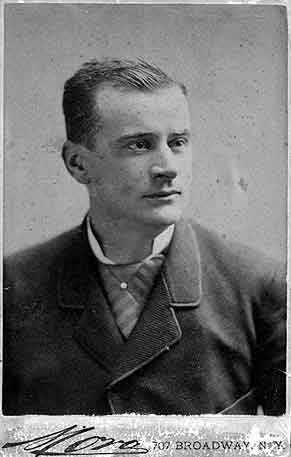
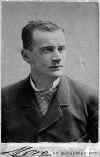 Edward
"Ned" Harrigan, the actor, lyricist and playwright who
became the toast of Broadway in the 1880s with stage partner Tony Hart
and composer David Braham. "Cabinet photos" like this could be
purchased in photographers shops. Edward
"Ned" Harrigan, the actor, lyricist and playwright who
became the toast of Broadway in the 1880s with stage partner Tony Hart
and composer David Braham. "Cabinet photos" like this could be
purchased in photographers shops.
|
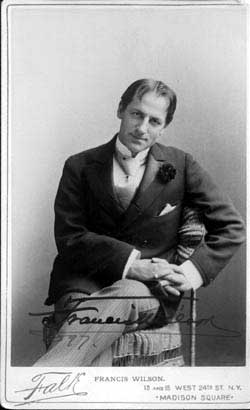
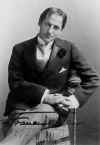 Francis Wilson,
star of Erminie. This genial comedian was so popular with his fellow
performers that they chose him as the first president of the Actor's Equity
Association. Francis Wilson,
star of Erminie. This genial comedian was so popular with his fellow
performers that they chose him as the first president of the Actor's Equity
Association.
|
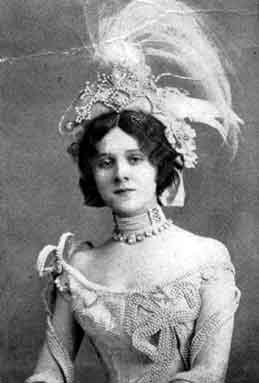
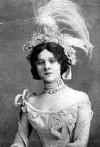 Edna May starred in the London production of
The Belle of New York (1897), an American musical comedy
that did poorly on Broadway but took the West End by storm. Edna May starred in the London production of
The Belle of New York (1897), an American musical comedy
that did poorly on Broadway but took the West End by storm.
|
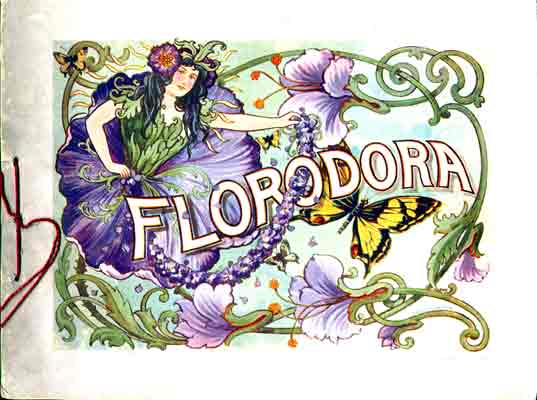
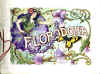 The
souvenir program cover for the original New York cast of Florodora
(1900). This colorful logo was typical of those used by Broadway
productions at that time. The
souvenir program cover for the original New York cast of Florodora
(1900). This colorful logo was typical of those used by Broadway
productions at that time.
|
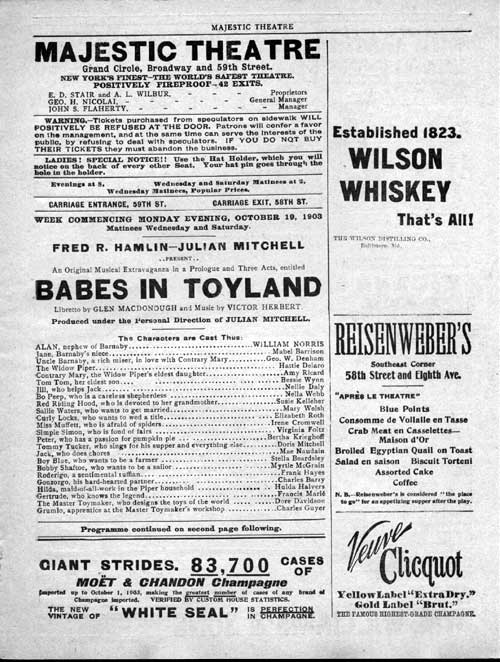
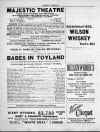 A program for the original production of Victor Herbert's
Babes in Toyland (1903). The period advertisements include a still-familiar
champagne, and a restaurant whose name would later be used by the headwaiter
in Hello Dolly (film version). A program for the original production of Victor Herbert's
Babes in Toyland (1903). The period advertisements include a still-familiar
champagne, and a restaurant whose name would later be used by the headwaiter
in Hello Dolly (film version).
|
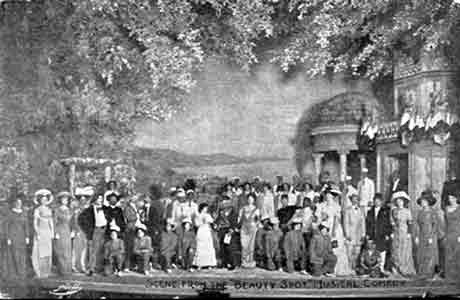
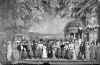 The Beauty Spot (1909) was a comic opera about a
general's daughter who wants to marry an artist. This post card does not identify this scene, but it
gives us some idea of the crowded ensemble numbers typical in musicals of that time. It ran 137 performances. The Beauty Spot (1909) was a comic opera about a
general's daughter who wants to marry an artist. This post card does not identify this scene, but it
gives us some idea of the crowded ensemble numbers typical in musicals of that time. It ran 137 performances.
|
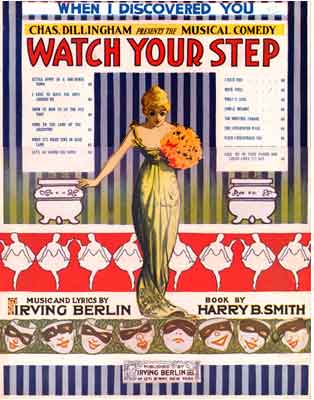
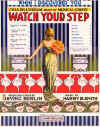 The original sheet music cover for Watch Your Step
(1914) gives you an idea of the ornate, colorful style that dominated theatrical memorabilia and
advertising in the 1910s. The score by Irving Berlin included several hits, most notably the counterpoint
"Play a Simple Melody," and the less well known "When I Discovered You." The original sheet music cover for Watch Your Step
(1914) gives you an idea of the ornate, colorful style that dominated theatrical memorabilia and
advertising in the 1910s. The score by Irving Berlin included several hits, most notably the counterpoint
"Play a Simple Melody," and the less well known "When I Discovered You."
|
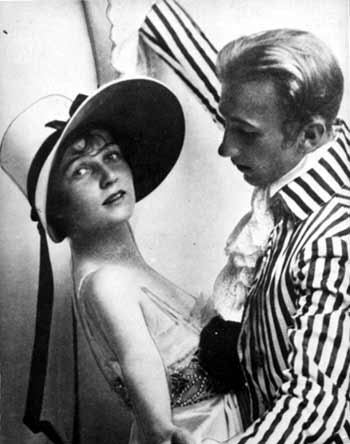
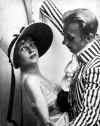 Irene and Vernon Castle, the versatile dance team that
took vaudeville and Broadway by storm in the 1910s. They inspired several dance
and fashion crazes. Their most memorable Broadway run was in Watch Your Step
(1914). Irene and Vernon Castle, the versatile dance team that
took vaudeville and Broadway by storm in the 1910s. They inspired several dance
and fashion crazes. Their most memorable Broadway run was in Watch Your Step
(1914).
|